My 12 years Experience, practical guide to getting more customers without wasting money on marketing.
You open your shop in the morning. You arrange your products, check your phone and wait for customers.
Some days are good. Some days are quiet.
You post on Instagram. You share an offer on WhatsApp. You even spend some money on advertising. People see your posts, a few ask for prices, and then... nothing.
No order. No sale. No clear reason why.
If this sounds familiar, you are not alone. Many small business owners face the same problem. They work hard, offer good products or services, but still struggle to bring in a steady number of customers.
And the confusing part? Everyone seems to have advice.
"Run Facebook ads."
"Post reels every day."
"Make a website."
"Do SEO."
But when you are already managing staff, customers, payments and daily work, where are you supposed to start?
Let us look at marketing from a different angle.
Maybe you do not need to try every marketing trick. Maybe you first need to understand why people are not choosing your business.
"Marketing is not just about getting attention. It is about giving customers a reason to choose you."
Before spending money, understand what is going wrong
Imagine you own a furniture shop.
A person visits your website, likes a sofa and sends you a message asking for the price. You reply after two days. By then, the person has already bought it from another shop.
Now think about this. Did you have a marketing problem? Not really. You had a response problem.
This happens more often than business owners realise.
Sometimes people are finding your business, but you are losing them somewhere along the way. Your reply may be late. Your price may not be clear. Your website may not show enough information. Or customers may simply not feel confident enough to place an order.
Before you spend another rupee, look at what happens when someone shows interest.
Ask yourself:
-
How do people find my business?
-
How many people contact me?
-
Do I reply quickly?
-
Do people understand what I am offering?
-
How many enquiries actually become sales?
You do not need a costly tool for this. A simple notebook or spreadsheet is enough.
Write down the numbers for one month. You may discover that your biggest problem is not getting enquiries. It is converting them into customers.
You cannot sell to everyone, and you don't need to
Many business owners make the same mistake. They want every person to become their customer.
A clothing shop wants students, office workers, families and everyone else to buy from it. A digital agency wants to work with every type of company. A restaurant tries to attract every person in the area.
But different people have different needs.
A family looking for affordable furniture may not care about the same things as someone furnishing a luxury apartment. A small shop owner may need a simple website, while a large company may need a complete online system.
Trying to speak to everyone often makes your message weak.
Here is a simple exercise. Think about your last 10 to 20 customers.
Who were they? What did they buy? Why did they choose you? Were they happy with the price, quality, service or convenience?
Look for a pattern.
Perhaps you notice that most of your best customers come through referrals. Maybe they care more about quality than discounts. Or perhaps they choose you because you explain things clearly.
That is useful information. Build your marketing around what your good customers value.
You do not need thousands of random people looking at your business. You need the right people to notice it.
People don't buy when they are confused
Let's say a customer visits two websites.
The first website has beautiful pictures, but no clear prices, no proper service details and no easy way to contact the business.
The second website explains the service, shows real work, answers common questions and makes it easy to ask for a quote.
Which one feels safer?
Most people do not want to take a risk with their money. They want to know what they are buying and who they are buying from.
This is why trust matters so much in marketing.
If you run a small business, you do not need to look like a big company. You need to look genuine.
Show your actual products. Share real customer feedback with permission. Explain how your service works. Give people a proper way to contact you. If you have completed projects, show them.
And please, do not copy customer reviews from another website. One genuine review is better than ten doubtful ones.
"Sirf dikhne se business nahi badhta, bharosa banne se badhta hai."
In simple words, being seen is not enough. People must feel they can trust you.
Your website should answer questions, not just look beautiful
A website is often the first meeting between your business and a new customer.
But many websites make this meeting harder than it should be.
A visitor lands on the homepage and sees a big image, a few general words and several buttons. They still do not know what the company actually does.
This is a missed opportunity.
Imagine someone searching for a website developer. They visit your website because they want help with their business. They should not have to spend five minutes trying to understand your services.
Make the important information easy to find:
-
What do you offer?
-
Who do you work with?
-
What makes your service useful?
-
Can visitors see examples of your work?
-
How can they contact you?
Also, open your website on your own mobile phone. Try to use it as if you were a new customer. Can you find the phone number? Does the page load properly? Is the text easy to read?
If you struggle to use your own website, your customers may be struggling too.
A website is not a decoration for your business. It should help people understand you and take the next step.
Social media: Stop posting just because you have to
"Post every day."
You have probably heard this advice many times.
But what should you post every day? Another product photo? Another discount? Another festival greeting?
Posting regularly can help, but posting without a reason can become a waste of time.
Think about a local bakery. A customer may want to know which cakes are available, how much they cost, whether custom designs are possible and how early to place an order.
Instead of posting the same cake photo again and again, the bakery can answer these questions.
It can show how a cake is made, explain the size options, share customer feedback or show a few designs for a birthday party.
Now the posts are doing something useful. They are helping a customer make a decision.
This is the simple rule I would follow: before publishing anything, ask, "Will this help someone understand my business, trust it or buy from it?"
If the answer is no, you probably do not need that post.
And do not feel you must be everywhere. Choose the platform where your customers are actually active. It is better to manage two platforms properly than to open five accounts and leave them empty.
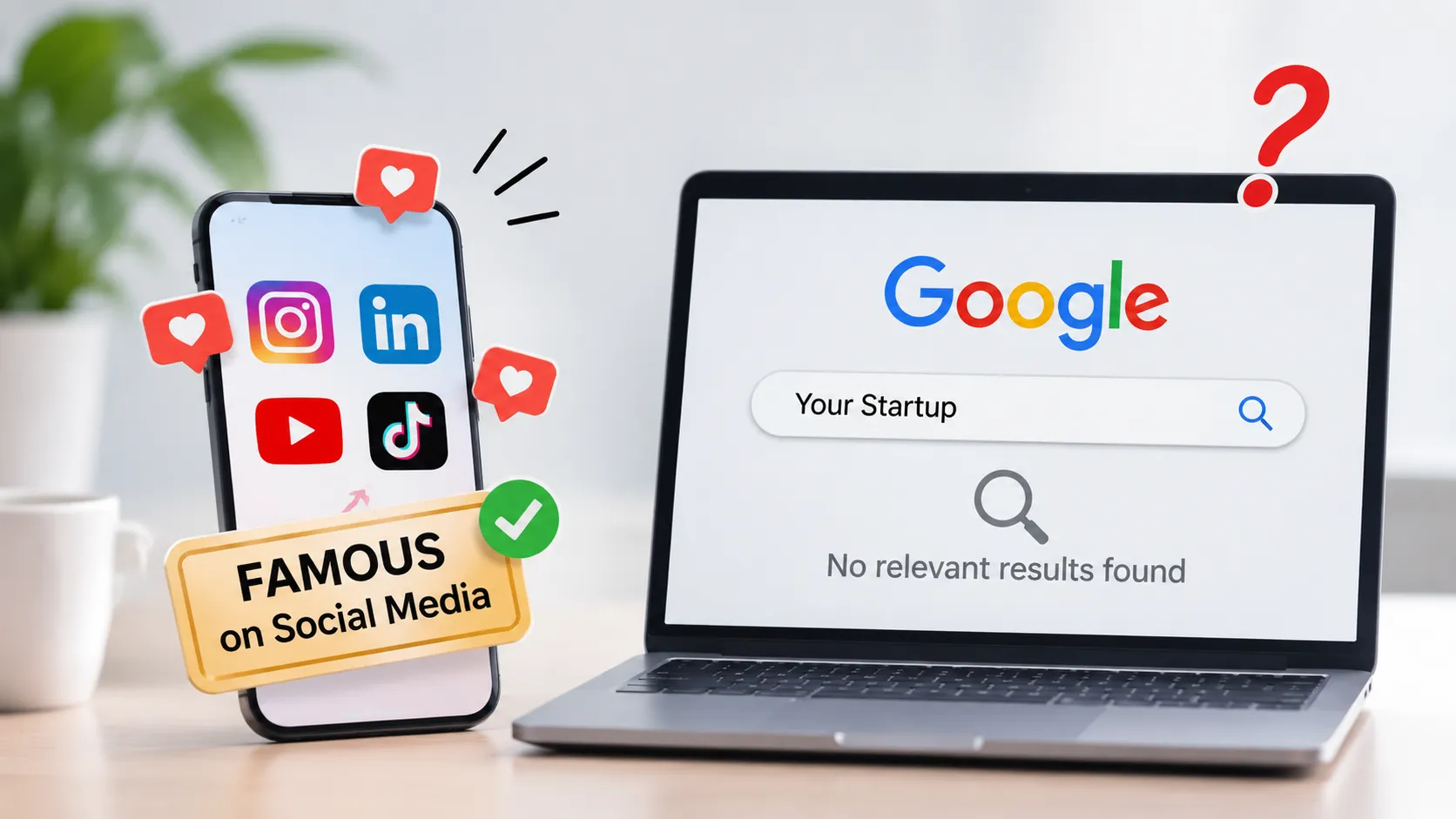
Google can bring customers who are already looking for you
There is a difference between showing an advertisement to someone and appearing when someone is actively searching for a service.
For example, a person who searches for "AC repair service near me" already has a problem. They are looking for someone who can help.
This is where SEO can be useful.
SEO, or Search Engine Optimisation, helps your website appear in relevant search results. It is not a magic trick, and it does not happen overnight. It takes useful content, a well-built website and regular work.
Start with the words your customers actually use.
If you are a plumber in Pune, people may search for "plumber in Pune" or "bathroom pipe repair near me". If you sell office furniture, people may search for "office chairs for small offices".
Your website should have clear pages about the products and services you offer. Do not put every service on one page and expect Google or customers to understand everything.
You can also write blog posts that answer common questions. A furniture shop might write about choosing a comfortable office chair. A home cleaning company might explain how often a house should be deep cleaned.
Keep the information useful. Do not write a blog just to repeat a keyword 20 times.
Also, give your Google Business Profile some attention. Add the correct phone number, opening hours, photos and business details. Ask customers who are happy with your service to leave honest reviews.
These are not exciting tasks. You may not see a sudden change after doing them. But they help build a stronger online presence over time.
Paid ads can help, but don't let them eat your budget
Paid advertising can bring attention quickly. But quick attention does not always mean more sales.
Suppose you spend ₹15,000 on Google Ads. Your website gets 300 visits and 30 enquiries. That sounds good at first.
But what if only two people become customers?
Would you spend another ₹15,000 without checking what happened?
Probably not.
The important question is not only how many people clicked your ad. It is how many useful enquiries you received and how many sales came from them.
Before starting an advertising campaign, decide what you want to promote. Choose the people you want to reach. Make sure the page they visit explains the offer properly.
Then track the results.
For example, you might record your ad spend, website visits, enquiries, serious leads and completed sales. These numbers will help you see whether the campaign is worth continuing.
Do not expect every campaign to work perfectly from day one. Test small, learn from the results and improve the campaign.
And remember, revenue is not profit. If an ad brings ₹30,000 in sales, you still need to consider the cost of your products, staff, delivery and other expenses.
Your next customer may be living just around the corner
Sometimes business owners spend so much time thinking about online reach that they forget the people nearby.
A salon, restaurant, coaching centre, repair shop or local store may get many of its best customers from the surrounding area.
If you have a physical location, make sure people can find it.
Keep your Google Business Profile updated. Add clear photos and correct opening hours. Make sure your address and phone number are right.
Think about what happens when someone searches for your service in your area. Does your business have enough useful information for that person to consider visiting?
You can also build local connections. Talk to nearby businesses. Take part in community events. Use a clear shop board or a well-placed banner. Share flyers where they are relevant.
A local customer may see your banner today, search your business tomorrow and visit next week. Offline and online marketing can support each other.
You do not have to choose one and ignore the other.
Sometimes, the best marketing is a good conversation
Think about the businesses you recommend to your friends.
You probably do not recommend them because they post five times a day. You recommend them because you had a good experience.
The staff were helpful. The product was good. The service was honest. They solved your problem.
That is powerful marketing.
Small businesses can build more of these connections through referrals and partnerships.
A photographer can connect with wedding planners. A bakery can work with event decorators. A web development company can build relationships with printing companies.
These businesses serve people who may need related services.
Start by building a real relationship. Understand what the other business does. See how you can help each other. Do not approach every person with a sales pitch.
A good recommendation can carry more trust than a random advertisement.
What about the customers who have already bought from you?
This is one area many businesses forget.
They spend money to find new customers but do very little to stay connected with the old ones.
Imagine someone bought a birthday cake from your bakery last year. If they were happy with it, they may order again this year. But will they remember your business when the next birthday comes?
You can stay in touch without bothering people.
A salon can send a polite appointment reminder. A clothing store can share new arrivals with customers who have asked for updates. A service company can check whether a previous customer needs further help.
Use WhatsApp or email only in a respectful way and with permission. Nobody likes receiving messages every morning from a business they visited once.
The idea is simple: do not treat every customer as a one-time sale.
A good customer experience can bring repeat orders, referrals and positive reviews. That is worth looking after.
Follow up. It may be the sale you are missing.
A person asks for your price. You send the details. They do not reply.
What do you do next?
Many business owners leave it there. They assume the person is not interested.
But people get busy. They compare options. They discuss purchases with family members. Sometimes they simply forget to reply.
A polite follow-up can bring the conversation back.
You could write:
"Hello, just checking whether you had a chance to review the details we shared. Please let us know if you have any questions."
That is enough. No pressure. No repeated messages.
Keep a small record of enquiries and their status. Note who needs a reply, who has received a quotation and who has placed an order.
It may sound like extra work, but it can stop good enquiries from being forgotten.
You don't need a huge marketing budget to begin
A small business may not have ₹50,000 or ₹1 lakh every month for marketing. That is perfectly fine.
The first step is not to spend more. It is to spend with a clear reason.
Let's say you have ₹10,000 available for marketing this month. You could use part of it for advertising, part for improving your website and the rest for useful content or local promotion.
But do not copy this budget blindly. Your business may need something different.
If your website is broken, fix that first. If customers cannot find your shop, improve your local presence. If people are visiting your website but not contacting you, understand why before buying more traffic.
The right order matters.
Fix the problem that is stopping customers from choosing you before paying to bring more people to it.
A practical plan for the next 90 days
If you are still wondering where to begin, do not try to change everything this week.
Give yourself three months.
Month 1: Understand and fix
Look at your customers and recent sales. Find out where your enquiries come from. Check your website, contact details and Google Business Profile. Make sure people can understand what you offer.
Month 2: Start reaching the right people
Share useful content. Improve your important website pages. Ask happy customers for honest reviews. Connect with a few local businesses. If your basic setup is ready, test a small advertising campaign.
Month 3: Look at the results
Which activity brought serious enquiries? Which enquiries became sales? Did customers return? Where did you spend money without getting much value?
Use these answers to plan the next three months.
Do not continue an activity only because you have been doing it for a long time. If something is not helping, understand why and make a change.
When is it time to get professional marketing help?
There is no shame in asking for help.
You may be good at running your business but not know how to improve website rankings. You may understand your customers but struggle to manage advertising. You may have a website but have no idea why it is not bringing enquiries.
That is when a digital marketing agency can help.
But choose carefully.
Ask what work the agency will actually do. Ask how it will measure progress. Ask how often it will share updates. Make sure you understand what you are paying for.
Be careful with promises like "first page of Google in seven days" or "100 guaranteed customers". No genuine agency can control every part of a customer's decision or Google's ranking system.
You need a team that understands your business, explains its plan and is honest about what is working and what needs improvement.
How Codioo can support your business
At Codioo, we believe digital marketing should help a business move forward. It should not be a collection of random activities.
A good website, useful content, search visibility and well-planned advertising should work together.
Depending on your needs, Codioo can help with:
-
Website development: Build a website that clearly explains your business and makes it easy for people to contact you.
-
SEO: Improve your website so potential customers can find your services through search engines.
-
Google Ads: Reach people searching for the products or services you offer.
-
Social media marketing: Share useful content and build a stronger connection with your audience.
-
Digital marketing: Bring different online activities together under a clear plan.
Every business has a different starting point. The first step is to understand what is holding it back.
If you want to discuss your business goals, get in touch with Codioo.
Frequently Asked Questions
What is the best marketing strategy for a small business?
There is no single strategy that works for every business. Start by understanding your customers. Make your business easy to find, show people why they can trust you and make it simple to contact you. Then choose the marketing channels that suit your customers.
How can I get more customers without spending too much?
Start with the things you already have. Improve your Google Business Profile, ask happy customers for reviews, share useful content and stay in touch with past customers where appropriate. These steps can help before you spend heavily on advertising.
Is social media enough for a small business?
Social media can help people discover your business, but it should not be your only plan. A website, Google search visibility, customer reviews and good follow-up can also play an important role.
How much should a small business spend on marketing?
It depends on your income, profit, business type and goals. Start with an amount you can afford. Track where the money goes and whether it brings useful enquiries or sales. Increase your spending only when you understand the results.
Why do people enquire but not buy?
There can be many reasons. Your price may not be clear, people may need more information, they may not trust the business yet or they may be comparing other options. Check how you respond and whether you follow up politely.
Is SEO worth it for a small business?
SEO can help people find your business when they search for related products or services. It takes time and regular work, but useful website pages and good search visibility can support long-term growth.
Should I hire a digital marketing agency?
You can consider an agency when you need help with your website, SEO, advertising or regular marketing work. Choose one that understands your business and explains its work clearly. Avoid anyone promising guaranteed rankings or sales.
One last thing before you spend more on marketing
Running a business already takes a lot of effort. You do not need another long list of things to do every day.
Start by finding the one problem that is costing you customers.
Maybe people cannot find you. Maybe they do not understand your service. Maybe they contact you but never receive a proper reply. Or maybe your existing customers simply forget to come back.
Find that problem and work on it.
You do not need to become an expert in every marketing channel. You need to understand your customers, earn their trust and give them a good reason to choose your business.
That is where better marketing begins.
⚠️ Ek Chhota Sa Disclaimer! 😎
Ye article koi magic formula nahi hai jo padhte hi aapke business mein customers ki baarish karwa de. 😂 Marketing mein overnight success, guaranteed sales aur 7 din mein business viral hone jaisi cheezein mostly Instagram reels mein hi achhi lagti hain!
Yahan share ki gayi tips 12 years of practical experience aur real-world marketing understanding par based hain. Har business alag hota hai, isliye jo strategy ek business ke liye kaam kare, zaroori nahi ki woh aapke liye bhi same results laaye.
So, blindly follow mat karna, smartly apply karna! Apne budget, customers aur business goals ko samajhkar decisions lein. Results aapki industry, competition, execution aur consistency par depend karte hain.
Aur haan, marketing ka matlab sirf likes, followers aur fancy posts nahi hai. Asli flex tab hai jab enquiries customers mein convert hon! 😉
Read, learn, experiment and grow. Baaki business aapka hai, boss! 🚀