A Shark Tank India appearance can put your startup in the spotlight, but what happens when the episode is over? Explore seven practical SEO moves to turn temporary publicity into long-term search visibility, customer discovery and organic growth.
Imagine this.
Your startup gets selected for Shark Tank India.
You prepare your pitch. You explain your product. The cameras are rolling. The sharks ask questions. The episode finally airs.
Suddenly, everything changes.
People start searching for your brand. Your Instagram followers increase. Your founder's LinkedIn profile gets attention. Influencers discuss your product. Customers visit your website. Some people even search for the product category for the first time.
For a few days, your brand is everywhere.
But then something interesting happens.
The episode is no longer the biggest topic of conversation. New startups appear on the show. Another founder goes viral. Social media moves on to the next big thing.
And your startup is back to fighting for attention.
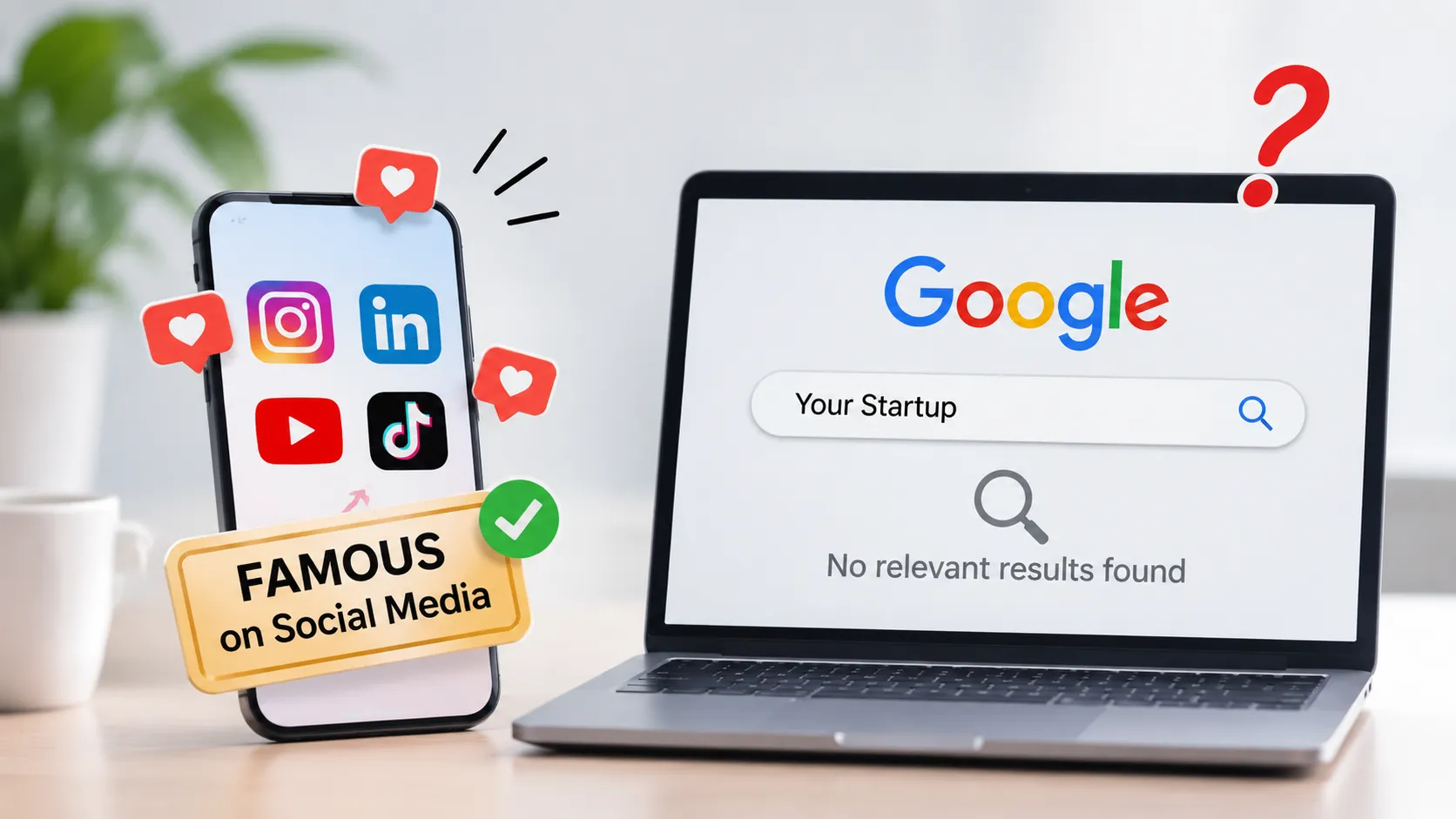
Here is the uncomfortable question: If someone discovers your startup six months after your Shark Tank appearance, will they still find you on Google?
Can they find your product when they search for a solution to their problem? Can they compare your product with alternatives? Can they understand why your brand is different? Can they find answers to their questions without having to visit your Instagram page?
This is where SEO becomes important.
A television appearance can introduce your startup to thousands of people. But SEO helps you build a way for people to discover your business even when nobody is talking about your Shark Tank episode.
And this is not only a Shark Tank problem.
The same challenge applies to startups that receive attention through:
-
Viral Instagram reels
-
Influencer collaborations
-
Founder podcasts
-
LinkedIn popularity
-
Newspaper and online media coverage
-
Startup awards and competitions
-
Celebrity endorsements
-
Investor announcements
-
Product launches
Attention is valuable. But attention without a long-term discovery strategy can be temporary.
In this article, we will look at seven SEO moves that Shark Tank India startups and similar growing businesses should consider after receiving public attention.
The objective is not to chase rankings for the sake of rankings. It is to make sure your startup is easier to discover, understand, trust and buy from.
First, understand the difference between getting attention and building demand
A Shark Tank appearance can create a sudden increase in interest. But there are different types of searches happening around your startup.
Consider these examples:
| Search behaviour | Example search | What the person wants |
|---|---|---|
| Brand discovery | Brand name + Shark Tank | To know more about the company |
| Product discovery | Brand name + product | To find a particular product |
| Problem discovery | How to reduce hair fall naturally | To understand a problem |
| Solution discovery | Best hair growth serum | To compare solutions |
| Purchase intent | Buy hair growth serum online | To purchase a product |
| Trust validation | Brand name reviews | To check whether the brand is reliable |
A founder may celebrate an increase in searches for their company name. That is useful, but it is only one part of the opportunity.
What happens when people search for the product category without knowing your brand?
That is where the bigger long-term opportunity may exist.
For example, a startup selling a specialised skincare product should not depend only on people searching for its company name. It should also understand how customers search for the skin concern, ingredients, product type, alternatives, usage instructions and buying options.
Your brand name is only one door through which customers can enter your website. SEO helps you build more doors.
7 SEO moves every Shark Tank India startup should make
1. Stop making your Shark Tank appearance the main reason people visit your website
This is one of the first mistakes a startup can make after getting media attention.
The homepage becomes full of Shark Tank references:
-
As seen on Shark Tank India
-
Featured on national television
-
Our founder's pitch
-
Our journey on the show
-
The sharks loved our product
There is nothing wrong with showcasing these achievements. They can help build credibility.
But think like a customer for a moment.
Someone searching for a product does not always care about your television appearance. They want to know whether your product solves their problem.
Suppose someone searches for:
-
Best protein snacks for office
-
Chemical-free skincare products
-
Sustainable packaging for small businesses
-
Healthy snacks for children
-
Affordable home organisation products
Will your homepage explain why your product is relevant to that search?
Or will it mainly tell visitors how your founder impressed the sharks?
The second approach may be interesting, but it does not answer the customer's immediate question.
What should you do?
Keep your Shark Tank appearance as a trust element, but make your product and customer value the main focus.
Your homepage should clearly communicate:
-
What does your startup sell?
-
Who is the product for?
-
What problem does it solve?
-
Why should customers consider it?
-
What makes it different?
-
What should a visitor do next?
Then create dedicated pages for your important products and categories.
For example, instead of sending every visitor to one generic homepage, a skincare startup could build separate pages for:
-
Face serums
-
Sunscreen
-
Moisturisers
-
Products for oily skin
-
Products for sensitive skin
-
Ingredient information
The exact pages should depend on the actual products and the way customers search. Do not create pages for keywords that your products cannot genuinely satisfy.
The real shift: Your website should stop behaving like a digital press release and start behaving like a salesperson who understands the customer's problem.
2. Find the searches happening around your product, not just your startup name
After a Shark Tank appearance, founders naturally check their brand name on Google.
They want to see whether their website appears first. They search their company name, founder name and product name.
That is understandable.
But here is a better question:
What are people searching for before they know your brand exists?
This is where many startups miss a valuable opportunity.
Let's take a hypothetical example.
Imagine a startup selling healthy, ready-to-eat snacks.
The founder may focus on ranking for the company name. But potential customers might be searching for:
-
Healthy snacks for office
-
High-protein snacks for travel
-
Healthy alternatives to chips
-
Low-sugar snacks
-
Healthy evening snacks
-
Convenient snacks for working professionals
These searches are not about the startup. They are about the customer's need.
If the startup has relevant products and useful content for these searches, it has a chance to become part of the customer's consideration process.
How to find these opportunities
Use Google Search Console if your website already receives organic impressions.
Look for:
-
Product-related queries you were not intentionally targeting.
-
Queries where your pages receive impressions but very few clicks.
-
Search terms that show a specific customer problem.
-
Product category searches where your website appears beyond the first few positions.
-
Questions people ask before making a purchase.
Then use Google autocomplete, related searches, customer reviews, support conversations and sales-team questions to understand the language customers actually use.
Do not just collect keywords. Group them according to what the customer is trying to do.
For example:
| Customer stage | Search example | Suitable page |
|---|---|---|
| Problem awareness | Why does my skin feel dry? | Helpful educational guide |
| Solution research | Best moisturiser for dry skin | Product category or comparison guide |
| Product research | How to use a ceramide moisturiser | Product guide |
| Purchase | Buy moisturiser for dry skin | Product page |
This is how SEO becomes connected to the buying journey.
A useful exercise: Ask five existing customers what they searched on Google before they discovered your startup. Their answers may reveal opportunities your marketing team has not considered.
3. Build pages for the questions customers ask before buying
Your founder may have explained the product perfectly during the Shark Tank pitch.
But your website should not assume that every future customer has watched that pitch.
A new visitor may have completely different questions.
For example:
-
Is this product suitable for beginners?
-
How is it different from regular alternatives?
-
What ingredients does it contain?
-
How long does it take to see results?
-
Is it suitable for daily use?
-
What is the return policy?
-
How should I use it?
-
Is it worth the price?
If your website does not answer these questions, customers may leave and look for answers elsewhere.
This creates an opportunity for useful, product-led content.
Create a customer-question content system
Start with your actual customer conversations.
Ask your sales and support teams to share the questions they receive repeatedly. Check product reviews and social media comments. Look at questions asked during live sessions and founder interviews.
Then create useful pages around those questions.
For example, a startup selling smart home devices could publish:
-
How much electricity does a smart plug consume?
-
Can a smart plug work with an ordinary appliance?
-
How to install a smart plug at home
-
Smart plug vs traditional timer switch
-
What should you check before buying a smart plug?
Notice the difference?
These are not random blog topics. Each one helps a potential customer understand the product.
You can also add concise FAQs to product pages, comparison pages and buying guides.
Google recommends creating helpful, reliable, people-first content rather than publishing pages simply to attract search traffic. The content should demonstrate real knowledge and provide meaningful value.
Google's guidance on helpful, people-first content
Think beyond the blog: Sometimes the best SEO page is not a 2,000-word article. It may be a detailed product page, a comparison table, an installation guide or a clear explanation of product specifications.
4. Turn your Shark Tank appearance into a permanent brand asset
Your Shark Tank episode may be available online. Your founder may have appeared on podcasts. Your startup may have been mentioned in news articles.
But are these appearances connected properly to your website?
A media mention can bring attention, referral visits and brand discovery. It may also create opportunities for relevant editorial links. But a mention is not automatically a backlink, and a backlink is not automatically a ranking improvement.
The opportunity is to make your media coverage easy to discover and useful to people who want to know more about your company.
Build a proper media and press page
Create a dedicated page on your website that includes:
-
Your Shark Tank India appearance.
-
Relevant interviews and podcast appearances.
-
Genuine media coverage.
-
Founder interviews.
-
Awards and recognitions.
-
Product launches and announcements.
-
Links to the original publications or videos.
Add a short explanation of what each appearance covered.
For example:
Our journey on Shark Tank India
A short introduction explaining what the company does, what product was presented and where visitors can watch the appearance.
Then connect that page to your About page, homepage and relevant product pages.
Do not stop at the appearance
If a media publication has covered your company, check whether the article contains a link to your official website.
If it does not, you can politely contact the editorial team and ask whether they would consider adding the official company link where appropriate.
Do not demand a link or pay for low-quality placements just to increase backlink numbers.
The bigger goal is to make it easy for customers, journalists, investors and potential partners to verify your brand.
5. Make your founder's knowledge searchable, not just their personality
Many startup founders become recognisable after Shark Tank.
They appear in interviews, share business advice on LinkedIn and discuss their startup journey on podcasts.
That is valuable attention.
But what happens when the founder stops posting for a few weeks?
Does the company's website still offer something useful?
This is where founder-led content can become a long-term asset.
The founder has knowledge that a generic content writer may not have:
-
Why the product was created.
-
What customer problem was noticed first.
-
What alternatives were tested.
-
What failed during product development.
-
What customers misunderstand about the category.
-
What the company learned from its first 100 customers.
-
What makes the product different in practical terms.
These insights can become original website content.
A practical example
Imagine a startup manufacturing eco-friendly packaging.
Instead of publishing another generic article called "Benefits of Sustainable Packaging", the founder could explain:
-
Why some small businesses struggle to switch to sustainable packaging.
-
What to check before choosing compostable packaging.
-
Why packaging strength matters during shipping.
-
Common mistakes when comparing packaging materials.
-
How to evaluate packaging costs beyond the purchase price.
These topics demonstrate knowledge of the actual business.
You can publish them as expert articles, product explainers, interviews or detailed guides.
Add a genuine author profile and explain the founder's role and relevant experience. Make sure the content reflects real expertise rather than invented credentials.
Your founder's story may get people interested. Their knowledge can give people a reason to return.
6. Fix the website experience before sending more traffic to it
Here is a situation that deserves more attention.
A startup gets featured on television. The founder shares the episode. Influencers post reels. People start visiting the website.
But the website is slow on mobile.
The product page takes too long to load. The images are too large. The checkout process is confusing. Important information is missing. Visitors cannot easily find the product they saw on the show.
The startup has spent months building attention, but its website is not ready to handle customer interest.
This is not only an SEO issue. It is a business issue.
Run a post-visibility website check
| What to check | What can go wrong | What to improve |
|---|---|---|
| Mobile experience | Visitors struggle to navigate | Test important pages on real mobile devices |
| Page speed | Pages feel slow | Review image sizes, scripts and hosting |
| Product information | Customers cannot understand the offer | Add clear features, benefits and specifications |
| Navigation | Visitors cannot find products | Simplify categories and menus |
| Checkout | Customers abandon purchases | Reduce unnecessary steps and errors |
| Trust signals | Customers hesitate to buy | Show genuine reviews, policies and contact details |
| Indexing | Important pages do not appear in Google | Check Search Console indexing reports |
Also review your Core Web Vitals and actual page experience.
Do not make the mistake of thinking that a fast homepage automatically means the whole website is healthy. Test product pages, category pages, blog posts and checkout journeys separately.
For a startup with limited resources, fixing a broken product page can be more valuable than publishing ten new blog posts.
Before asking more people to visit your website, make sure the website gives them a good reason to stay.
7. Build an SEO system that still works when the next startup goes viral
This is probably the most important move.
Every few weeks, a new startup becomes popular.
A founder gets featured in the media. A product becomes a trend. An influencer talks about a new brand. Another company gets attention from investors.
The internet moves quickly.
If your startup's marketing strategy depends entirely on being the next big conversation, you will always be chasing the next opportunity.
SEO gives you a different approach.
Instead of asking, "How do we get attention this week?", start asking:
-
What problems will our customers continue to search for?
-
Which products have consistent demand?
-
What questions do customers ask before buying?
-
Which pages should bring us qualified visitors?
-
What information can only our company explain properly?
-
Which searches are competitors capturing today?
Build a simple evergreen SEO structure
For most product-led startups, a practical structure could include:
1. Brand pages
Your homepage, About page, founder information and media coverage.
2. Product pages
Dedicated pages explaining each important product, its features, use cases, specifications and benefits.
3. Category pages
Pages that help customers explore relevant product groups.
4. Problem-solving content
Useful guides that explain the problems your products genuinely address.
5. Comparison content
Honest comparisons that help customers understand the differences between options.
6. Customer support content
FAQs, setup guides, usage instructions, troubleshooting and after-purchase help.
Connect these pages with relevant internal links.
For example, an educational article about choosing a particular product should link to the relevant category or product page where appropriate. A product page should link to useful instructions and FAQs.
This creates a connected website instead of a collection of disconnected articles.
For a more detailed introduction, read our guide on SEO for Startups.
Track business outcomes, not just rankings
A startup should not judge SEO only by the number of keywords appearing in Google.
Track:
-
Organic clicks and impressions.
-
Non-branded search traffic.
-
Product and category page traffic.
-
Organic enquiries and purchases.
-
Conversion rate from organic visitors.
-
Revenue from organic sessions, where measurable.
-
Returning visitors and assisted conversions.
-
Search visibility for important product categories.
Use Google Search Console for search performance and analytics tools for website behaviour and conversions.
Remember that SEO is not a replacement for every other marketing channel. Paid advertising, social media, PR, email and partnerships can all support growth.
The goal is to build a discovery channel that does not disappear when a campaign ends.
For measuring the commercial value of SEO, see our guide to SEO Outsourcing ROI.
What should a Shark Tank startup do in its first 90 days after the show?
You do not need to rebuild your entire website in one week.
You also do not need to publish 50 blogs immediately.
A focused 90-day plan is a better starting point.
| Timeline | Priority | Actions |
|---|---|---|
| Days 1–15 | Understand the situation | Audit the website, check Google Search Console, identify important products and review customer questions |
| Days 16–30 | Fix the foundation | Improve homepage messaging, product pages, mobile usability, indexing and technical issues |
| Days 31–45 | Find search opportunities | Research product, category, problem-based and comparison searches |
| Days 46–60 | Publish useful assets | Create buying guides, product explainers, FAQs and founder-led content |
| Days 61–75 | Build brand discovery | Organise media coverage, improve internal links and strengthen relevant brand references |
| Days 76–90 | Measure and improve | Review search performance, conversions, content engagement and pages needing improvement |
The exact timeline depends on the website's current condition, team capacity and business model. A startup with a technically weak website may need more time for the foundation before publishing lots of content.
The important thing is to prioritise work based on customer value and business impact.
A practical example: Two startups, two different growth strategies
Let's consider two hypothetical startups that have both appeared on Shark Tank India.
They sell products in similar categories and receive comparable attention after their episodes.
Startup A: The attention-dependent approach
-
Shares the episode repeatedly on Instagram.
-
Publishes founder photos and media mentions.
-
Runs influencer campaigns.
-
Sends most website visitors to the homepage.
-
Focuses mainly on brand-name searches.
-
Does not regularly improve product pages.
-
Has no clear content plan based on customer questions.
When the social media conversation slows down, the startup has few other discovery routes.
Startup B: The discovery-led approach
-
Uses the Shark Tank appearance as a credibility signal.
-
Improves its homepage and product pages.
-
Researches how customers search for its products.
-
Publishes useful product guides and comparisons.
-
Answers genuine customer questions.
-
Organises media coverage on its website.
-
Tracks non-branded organic traffic and purchases.
Startup B is building assets that can remain useful after the television appearance is no longer trending.
This is not a claim that SEO guarantees Startup B will outperform Startup A. It illustrates the difference between relying on temporary attention and building a repeatable discovery system.
The important lesson is simple:
Do not confuse a successful marketing moment with a sustainable marketing system.
Common SEO mistakes Shark Tank startups should avoid
Before investing more money in SEO, avoid these common mistakes:
1. Publishing too many blogs without a strategy
A large blog section does not automatically create organic growth. Publish content that helps your actual customers make decisions.
2. Targeting only your brand name
Branded searches are useful, but customers who have never heard of you also need a way to discover your products.
3. Copying competitors' content
Your startup has its own product knowledge, customer feedback and business experience. Use those insights rather than rewriting the same articles everyone else has published.
4. Buying backlinks without checking quality
A large number of irrelevant links is not a substitute for genuine brand relevance, useful content and a good website.
5. Ignoring product pages
A blog may bring visitors, but the product page often needs to help them decide whether to buy.
6. Treating social media engagement as SEO performance
Followers, likes and views are useful marketing indicators. They do not automatically mean your website is gaining organic search visibility.
7. Expecting SEO results overnight
SEO takes time. Technical improvements, content quality, competition, website history and search demand all influence how results develop. Be careful of anyone promising guaranteed rankings or a fixed traffic increase.
What about AEO and AI search? Should Shark Tank startups care?
Yes, but do not treat it as a shortcut around SEO.
Customers increasingly use conversational search experiences and AI tools to research brands, compare products and understand solutions.
A startup should make it easy for search systems and people to understand:
-
What the company does.
-
Which products it sells.
-
Who those products are designed for.
-
What makes the products different.
-
How they work.
-
What questions customers commonly ask.
-
Where people can verify the company's claims.
Start with clear product descriptions, useful FAQs, accurate company information, original expertise and consistent brand details across relevant online platforms.
Use appropriate structured data where it genuinely applies, and make sure your important pages can be crawled and indexed.
But remember: no schema markup, AEO checklist or AI optimisation trick guarantees that a brand will appear in an AI-generated answer.
The strongest foundation remains useful, trustworthy information that answers real customer needs.
Final thought: Your Shark Tank appearance is a beginning, not a growth strategy
Getting featured on Shark Tank India is a significant opportunity.
It can introduce your product to people who may never have discovered it otherwise. It can create conversations, media coverage, customer interest and new business opportunities.
But the episode has a limited duration. Your business does not.
Six months later, a customer may not remember which season you appeared in. They may not remember the founder's pitch. They may not even know your company name.
They will still search for the problem they want to solve and the product they want to buy.
That is why your startup needs more than visibility during a television appearance.
It needs a website that explains the product, pages that answer customer questions, useful content that builds trust and a search strategy that supports the business over time.
At Codioo, we believe startup marketing should move beyond temporary attention and focus on building digital assets that support long-term discovery.
The real question is not whether people can find your startup after Shark Tank. It is whether they can find it even when Shark Tank is no longer part of the conversation.
If your startup has received attention but is still struggling to build consistent organic visibility, it may be time to look beyond the next campaign and build a stronger SEO foundation.
Frequently Asked Questions
1. Why should Shark Tank India startups invest in SEO?
SEO helps startups become discoverable when potential customers search for their products, categories and the problems they solve. It can support long-term organic visibility beyond the initial attention received from a television appearance.
2. How soon should a startup start SEO after appearing on Shark Tank India?
A startup can start reviewing its website and search visibility immediately. Begin with technical checks, product pages, customer search behaviour and Google Search Console. There is no need to wait until the media attention slows down.
3. Does appearing on Shark Tank India improve Google rankings?
Not automatically. A television appearance does not guarantee higher rankings. It may increase brand awareness and lead to searches, media coverage or relevant website mentions, but search visibility depends on many factors.
4. Should Shark Tank startups create a separate SEO page?
A dedicated media or press page can be useful for collecting genuine interviews, media coverage, videos and brand announcements. However, it should complement—not replace—strong homepage, product and category pages.
5. What keywords should Shark Tank startups target?
Startups should research brand-related, product-related, category-related, problem-based, comparison and purchase-intent searches. The best keywords depend on the actual product, audience and customer journey.
6. Is social media marketing enough for a startup after Shark Tank?
Social media is useful for awareness, engagement and customer communication. However, it should not be the startup's only discovery channel. SEO, email, paid campaigns, PR and other channels can create a more balanced marketing strategy.
7. How can a startup convert Shark Tank publicity into website traffic?
Use clear website messaging, relevant product pages, a media page, useful content and appropriate links from genuine media coverage. Make sure visitors can easily understand the product and take the next step.
8. What should a startup fix first: SEO or website design?
Start with the issues that prevent customers and search engines from using the website properly. That may include mobile usability, navigation, unclear product information, technical indexing problems or a confusing checkout. SEO and website experience should work together.
9. Can a startup get organic traffic without spending heavily on advertising?
Yes, organic search can bring visitors without paying for every click. However, SEO requires investment in strategy, content, technical improvements and ongoing work. It is not a free or instant traffic source.
10. How can Shark Tank startups measure SEO success?
Track organic clicks, non-branded search queries, product page visits, enquiries, purchases, conversion rates and revenue where attribution is available. Rankings alone do not show whether SEO is helping the business.
11. Should founders write SEO content themselves?
Founders should contribute their product knowledge, customer insights and industry experience. A content or SEO team can help turn that knowledge into well-structured, search-friendly pages without losing the founder's genuine perspective.
12. Is SEO useful for startups that did not get a deal on Shark Tank?
Absolutely. The same principles apply to startups that appeared on the show without securing an investment, as well as businesses that gained attention through podcasts, influencers, PR, awards or viral campaigns. The objective is to build discoverability beyond the original event.
About Codioo
Codioo helps businesses strengthen their digital presence through SEO, website development and digital growth strategies. Our focus is on building useful digital experiences that help brands connect with the right audience and create sustainable online visibility.
Want to build organic visibility beyond your next viral moment? Explore our SEO for Startups guide.